Ella to Mirissa, from the hills to the coast without a vague endpoint.
Use the real accommodation at both ends, choose a vehicle around the luggage, and treat any viewpoint or meal as a deliberate part of the travel day.
Town names are only the beginning.
An Ella hotel may sit above a narrow approach, while a Mirissa villa can be outside the centre or behind a road unsuitable for every vehicle. Use full property names and map locations so the journey is priced and assigned to the real endpoints.
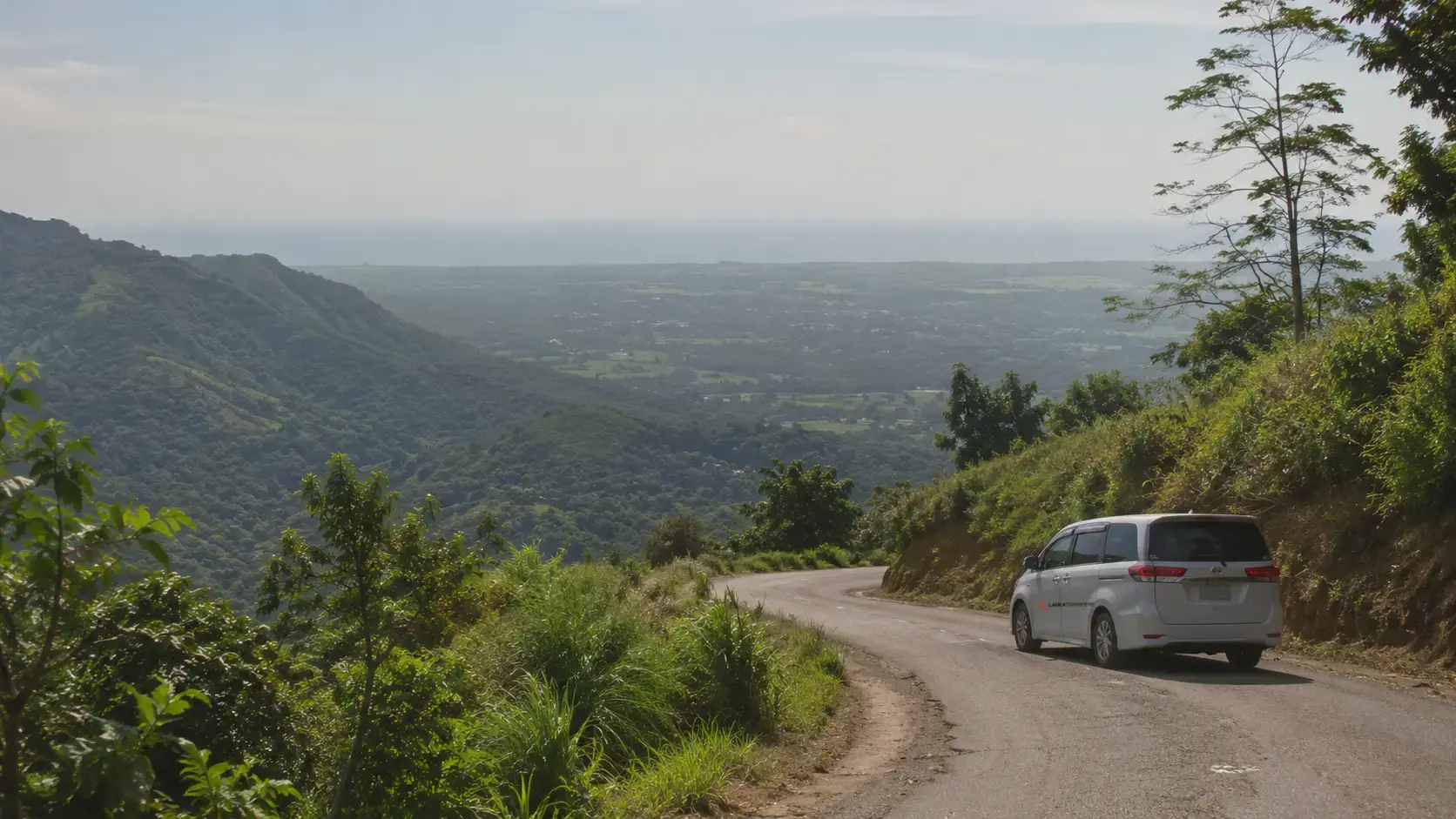
The descent leaves cooler hill-country roads and enters warmer low-country traffic. Weather, local conditions and the final access road matter more than a rigid promise based only on kilometres.
Choose pauses that support the journey.
A meal, washroom break or short viewpoint can make the transfer more comfortable. A large detour or timed attraction should be named before confirmation so the driver can check the route, working time and mileage.
Keep one comfort stop flexible. That is different from treating the whole travel day as undefined.
Compare capacity before price.
The scheduled listing must match the date, route, seats and both luggage counts. If it does, its published fare can sit in the plan. Otherwise, send the same leg as a request without losing the rest of the itinerary.
Sensitive travellers may also want a gentle pace on winding roads. Include that need in the request rather than raising it only after departure.
Before you submit the journey.
Can we stop at a viewpoint on the way?
Yes, when the stop fits the confirmed route and allowance. Name an important stop in advance; do not assume every attractive place on a map is a small detour.
Can we continue to Weligama or Galle instead?
Yes, but create the plan with the actual destination. Mirissa, Weligama, Unawatuna and Galle are not interchangeable endpoints.
Can we book without choosing a scheduled ride?
Yes. Submit the route as a requested leg. Its price remains pending until a suitable driver responds and the arrangement is checked.