How to choose a private transfer in Sri Lanka.
The useful choice is not simply car versus van, or cheapest versus most expensive. It is whether the route, vehicle, driver, luggage fit and confirmation process make sense together.
Move from the framework to the real journey.
Use the website and app in your language.
Choose EN, DE, FR, IT, ES, 日本語 or Русский in the header on the website or customer app. On your first visit, we use a supported browser language, with English as the fallback. Your manual choice is remembered across both. Switching language keeps your current booking fields and selected trips in place.
A clearer picture of your transfer.
Open the LankaTransfers app, choose My trips and open your booking. For a simple transfer, the trip card shows estimated road distance and driving time when map data is available, together with a cropped outline of the route area marking the journey endpoints. These estimates exclude traffic and stops; the illustration is not a navigation map.
Trip cards research worthwhile attractions along your driving route and show a specific reason to visit, a source link under Read about this place, and an estimated detour such as 7 minutes. This means extra driving time for that stop alone, without traffic or time spent visiting. Suggestions appear when reliable place and road data are available. Choose Ask about a stop to discuss an idea with our team. Stops are not included automatically: agree any extra time, entry fees and fare changes before travelling.
Start with the journey you actually need.
A private transfer is a confirmed movement between real addresses, shaped around the travellers and their luggage. It may include an agreed comfort or meal stop, but it should not quietly become an undefined sightseeing day.
Enter the route, date and departure window before comparing a listing. A low fare for the wrong date, location or vehicle is not a useful match.
Approval and fit matter more than a generic promise.
LankaTransfers is designed around approved drivers, approved vehicles and published availability. Driver credentials, passenger cover and vehicle suitability are checked as part of the service rather than presented as unsupported badges.
The final arrangement should name the assigned driver and vehicle only after availability and fit have been checked.
Count passengers and bags as separate constraints.
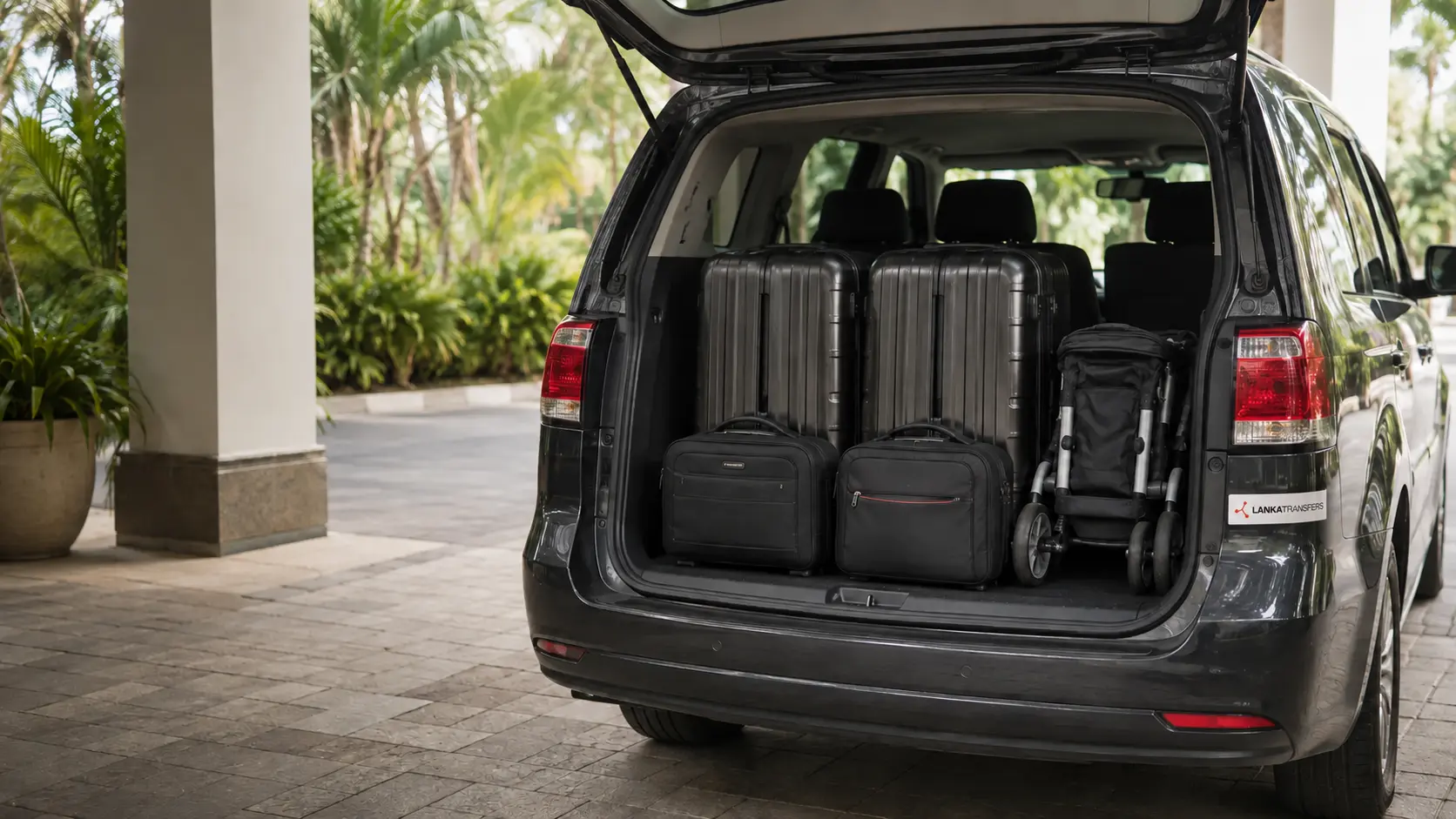
A vehicle may have enough seats and still lack safe luggage space. Record large cases, cabin bags, pushchairs and specialist equipment before selection.
Choose the smallest suitable vehicle, not automatically the smallest listed class or the largest available badge.
Separate known fares from costs still awaiting a driver.
A compatible scheduled ride can publish a fare and relevant allowance. A requested route has no price until a driver responds, so the amount stays pending rather than appearing certain.
For touring-day returns and between-journey continuity, driver-specific mileage and expense terms apply only when a scheduled driver has been selected.