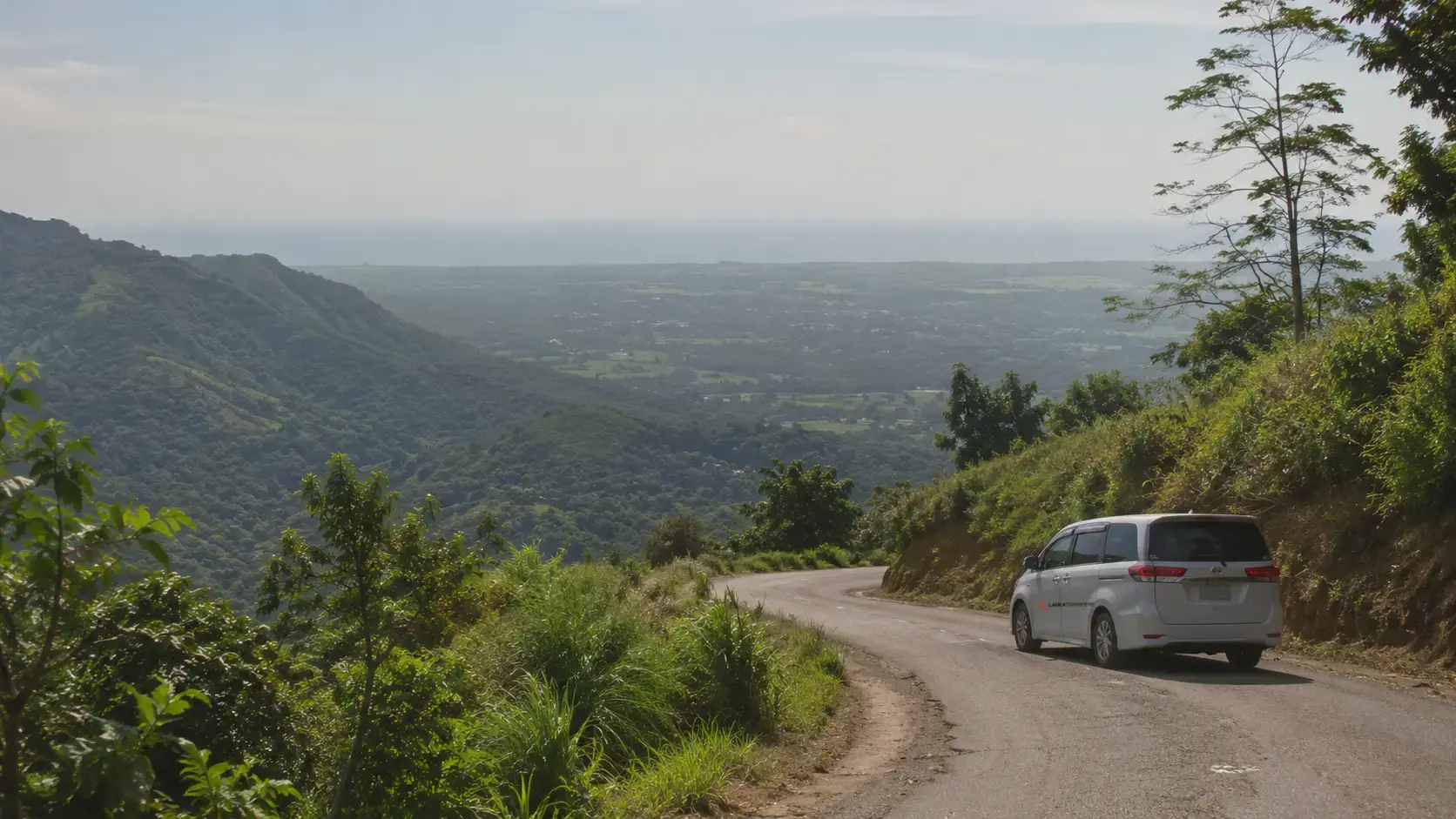
‘South coast’ is useful in conversation but too broad for a transfer. Mirissa, Weligama, Unawatuna and Galle are distinct endpoints, and a villa outside a town may involve a narrower final road than a central hotel.
Name the actual coastal destination
Use the accommodation’s full name and map location. Similar property names are common, and beach access roads do not always behave like the main coastal route shown at a small scale.
If you have not chosen the hotel, choose the town before requesting a fare. A driver can price a real route; a vague coastline forces assumptions that later appear as changes.
Save the property pin and a working telephone number for the accommodation. The last kilometre is where precise information matters most.
Treat it as a travel day
The distance can look manageable, yet the hill-country descent, local traffic, weather and stops shape the day. Avoid promising yourself a beach afternoon that depends on every part of the road running perfectly.
A private vehicle provides control over rest breaks and luggage, not immunity from the road. Build in margin for check-out, breakfast and arrival formalities at the next property.
Travellers sensitive to winding roads may prefer a lighter breakfast, a seat with a forward view and a driver who knows in advance that a gentle pace matters.
Choose stops that belong to this journey
A viewpoint, meal or short pause can turn a transfer into a pleasant transition. Too many stops can make luggage security, timing and heat more complicated than expected.
Agree on any important stop before the ride. Ask whether it sits naturally on the route and whether it exceeds the included extra mileage. An attractive place on a travel map may require a meaningful detour on real roads.
Keep flexibility for one unplanned comfort stop. This is different from leaving the whole route undefined; it simply recognises that people do not always need a break according to the itinerary.
Use the dedicated Ella-to-Mirissa page to carry the route into the planner and compare scheduled availability with a request.
Plan the coast transfer →Make luggage fit before pickup
Ella departures often follow train travel, hiking or several hotel changes, so bags have a habit of multiplying. Recount them before the next vehicle is assigned.
A vehicle’s passenger seats and luggage capacity are separate facts. Four seats do not guarantee room for four large cases. Use the published vehicle profile and ask when the fit is uncertain.
Keep medicines, documents, electronics and swimwear for the first evening in a small personal bag. Even with door-to-door transport, separating essentials makes a delayed room or awkward check-in less disruptive.
Plan for the coast’s final roads
Coastal traffic and narrow property approaches can slow the last part of the drive. Tell the driver if the accommodation has sent special entrance instructions, especially for hillside villas or lanes that are not suitable for every vehicle.
If the driver cannot safely reach the exact door, the alternative drop-off and luggage handover should be agreed with the property. Safety and vehicle access take priority over forcing a map pin.
Confirm the property’s check-in window and keep them informed if the road changes the arrival. A private transfer works best when driver, traveller and accommodation share the same endpoint.
Keep the next transfer separate
Many coastal stays include several days without a need for a dedicated vehicle. In that case, end the Ella transfer at the hotel and arrange local travel separately.
If the same driver is useful for sightseeing and the onward move, compare the cost of keeping the vehicle between journeys. Each full day is 100 km × that driver’s per-kilometre rate, plus Driver Bhata/allowance, meals and accommodation.
For a requested ride, those profile values are not assumed. The platform keeps them pending until a responding driver provides the terms, so the plan does not quietly inherit a number from an unrelated driver.